How can you show your “tree appreciation”? Go outside and have some fun with trees. Here are three activities that help kids see trees in a whole new way, plus a look at why trees matter so much to wildlife and people.
Adopt a Tree
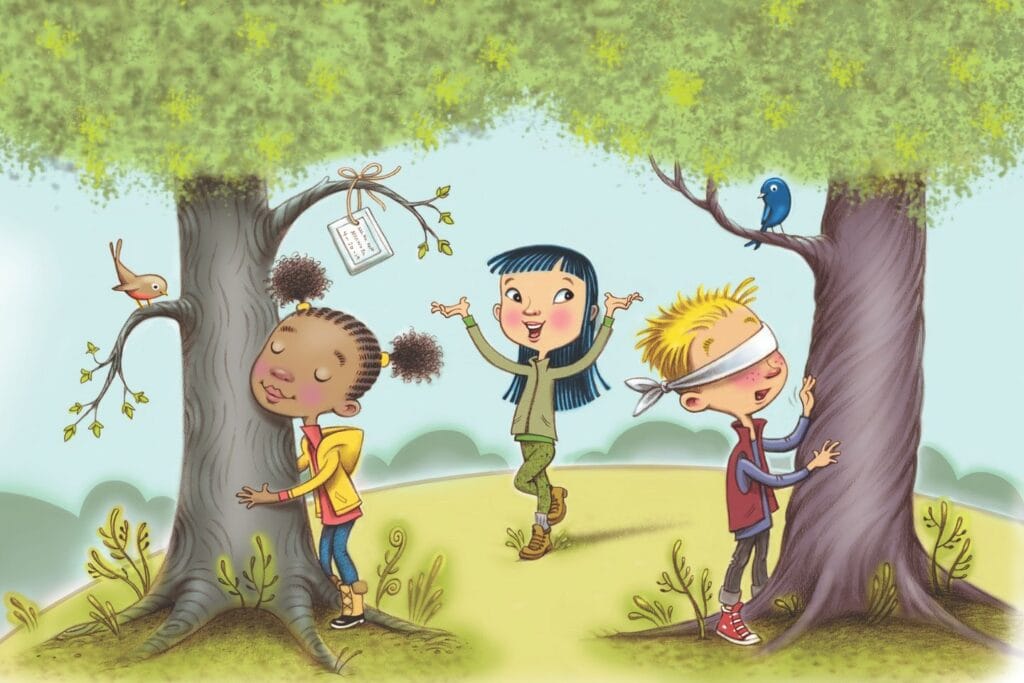
Pick a special tree near your home, in a park, at school, or anywhere you visit often. Get to know it throughout the year.
What you need: A tree, a nature identification guide or app, a notecard, a pen, a plastic sandwich bag, and about 10 inches of string.
What you do:
- Choose your tree and figure out what kind it is using a guide or app.
- Write your name, the type of tree, and the date on a notecard. This is your adoption certificate.
- Slip the notecard into a plastic bag to protect it from rain.
- Tie it gently to a low branch with string.
- Visit your tree regularly. On the back of your card, jot down what you notice: new leaves, visiting birds, insects, changes with the seasons.
Explore a Tree
This one works best with a partner and a group of trees.
What you need: A blindfold and a friend.
What you do:
- One person puts on the blindfold.
- The partner carefully leads them to a tree.
- The blindfolded person explores the tree using only touch and smell. Feel the bark, reach for branches, notice the shape of the trunk.
- The partner leads them back to the starting spot and removes the blindfold.
- Now try to find your tree using only what you remember. Was the bark rough or smooth? Was the trunk thick or thin?
- Switch roles and try again with a different tree.
Be a Tree!
Grab some friends and head to a spot with different kinds of trees.
What you do:
- Take turns picking a tree and using your body to mimic it. Spread your arms wide like an oak. Stand tall and straight like a pine. Lean to one side like a windblown cypress.
- Everyone else guesses which tree you’re imitating.
- Get creative. Use your arms as branches, your legs as the trunk, and your fingers as leaves.
Why Trees Matter
They clean our air. Trees are sometimes called “the lungs of the Earth.” Their leaves absorb carbon dioxide and release oxygen. One acre of trees produces enough oxygen for 18 people every day.
They keep us cool. Shade trees lower the temperature around them in summer. In winter, trees that lose their leaves let warming sunlight through.
They protect our water. Tree roots hold soil in place during storms, keeping dirt from washing into streams and rivers.
They make us happier. Research shows that spending time around trees helps people feel calmer and more relaxed. Kids who learn near trees tend to focus better, too.
They bring communities together. Tree-planting projects are a great way to meet neighbors and make a difference where you live.
Want to help plant trees for wildlife? Check out the National Wildlife Federation’s Trees for Wildlife program.