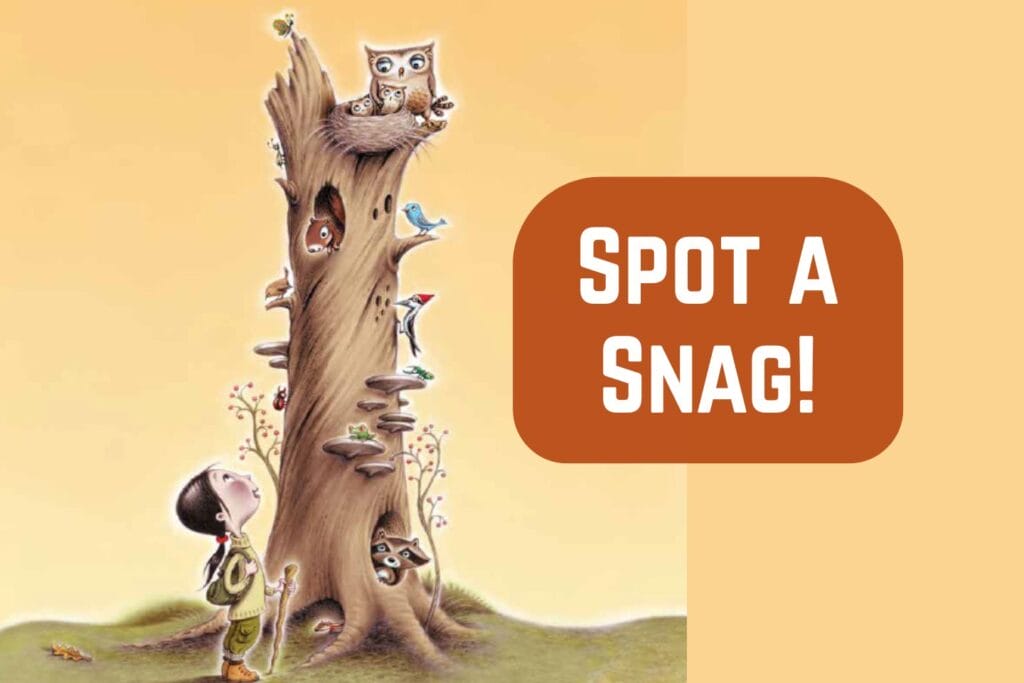
Oh, a dead tree. What a drag. No, not a drag—a SNAG! A snag is a dead tree that is still standing. Of course, a tree does many good things when it is alive. But after it dies, it can be just as important for wildlife.
Here are some animals that don’t think snags are a drag at all:
- Tree squirrels, flying squirrels, and raccoons that make cozy nests inside hollow parts of the tree.
- Bats that rest underneath the loose bark.
- Butterflies, moths, treefrogs, and other small animals that hide in holes and under bark.
- Beetles and other insects that tunnel into the soft, rotting wood to lay their eggs.
- Woodpeckers that eat the insects and carve out holes for their nests.
- Birds such as owls, wrens, bluebirds, and wood ducks that move into woodpeckers’ holes after they move out.
- Eagles, ospreys, herons, and owls that build nests atop snags.
- Flycatchers, kingfishers, and birds of prey that use snags as perches and look-outs when hunting.
SPOT A SNAG!
Next time you’re in a forest, in a field, or near water, keep an eye out for snags. Use the checklist below to describe what you discover about each one.
- Animals using the snag: What kinds do you see? How are they using it?
- State of the snag: Is it sturdy, or do you think it will soon fall?
- Fallen logs: These may have been snags once. Look on, in, and under the log for more animals.
- New trees: Tree seeds sprout, take root, and grow in the rich soil formed when logs rot away.
Snags may be dead, but don’t be fooled—they are full of life!