
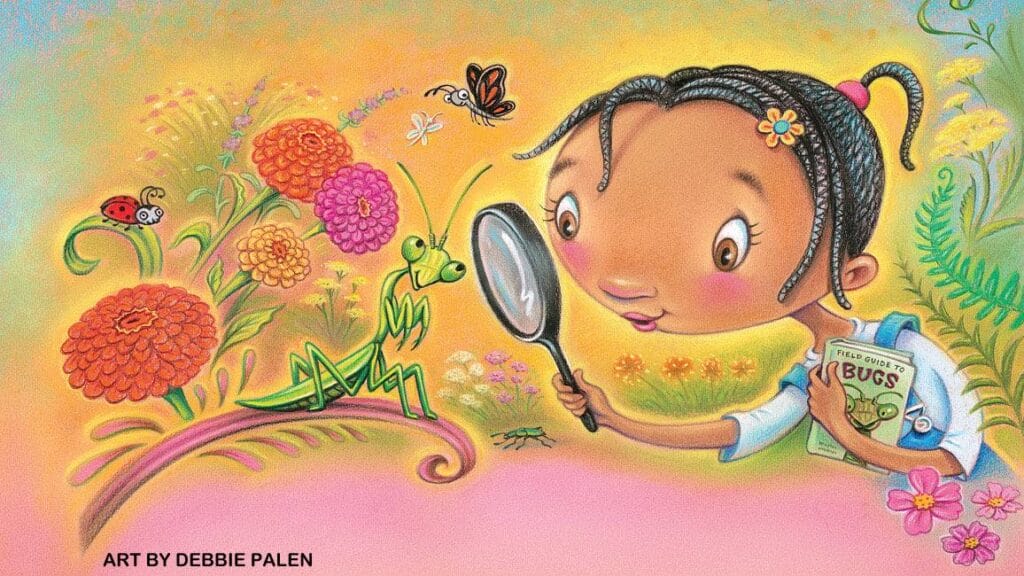
Some bugs bite. Some bugs sting. And some bugs are quietly saving your garden. Ladybugs gobble up pests. Bees pollinate the flowers that become your food. Beetles break down dead leaves into fresh soil. These are the good guys, and they’re probably living right outside your door.
Grab a magnifying glass and head outside. It’s time to find the helpful insects in your neighborhood.
Materials
- A magnifying glass (or just your eyes)
- A notebook and pencil for recording what you find
- A bug identification guide or app (optional)
Don’t have a magnifying glass? Your phone camera zoomed in works surprisingly well. No field guide? Just draw or describe what you see and look it up later.
Nature Connection
Every bug you found during your hunt is part of a food web. Ladybugs eat aphids. Birds eat ladybugs. Hawks eat birds. Pull one piece out and the whole web shifts.
Insects make up more than 80% of all known animal species on Earth. They pollinate our crops, break down waste, feed other wildlife, and keep pest populations balanced. Without them, ecosystems collapse.
The good news? You don’t need a big yard or fancy equipment to help insects thrive. A pot of flowers, a shallow dish of water, and a decision not to spray chemicals can make your corner of the world a little more bug-friendly. And that’s good for everyone.
How to Do a Backyard Bug Hunt
- Pick your spot. Any outdoor area with plants works: a garden, a park, a weedy patch by a sidewalk, a window box, or even a crack in the pavement where something is growing. Bugs go where plants are.
- Slow way down. The trick to finding bugs is patience. Stand or crouch in one spot and look closely for 2 to 3 minutes before moving on. Check under leaves, on stems, on flowers, and on the ground beneath plants.
- Look for the four types. As you search, try to spot at least one bug from each of the four groups below. Keep a tally in your notebook.
- Record what you find. Write down (or draw) each bug, where you found it, and what it was doing. Over time, your notebook becomes a field guide to your own neighborhood.
- Go back again. Different bugs are active at different times of day and in different seasons. A morning hunt turns up different species than an evening one. Try the same spot a week later and compare.
Four Kinds of Beneficial Bugs to Find
Predators: The Pest Patrol
These insects hunt and eat the bugs that damage plants.
- Ladybugs eat up to 50 aphids per day. One ladybug can eat 5,000 aphids in its lifetime.
- Lacewings have delicate, see-through wings, but their larvae are fierce. Lacewing larvae are nicknamed “aphid lions” because they devour pests so aggressively.
- Praying mantises sit perfectly still, then strike with lightning speed. They’ll eat almost any insect they can catch.
- Ground beetles patrol the soil at night, eating slugs, snails, cutworms, and other ground-level pests.
Parasitoids: The Tiny Specialists
Parasitic wasps are so small you might never notice them, but they’re incredibly effective pest controllers. The females lay eggs inside harmful caterpillars and other pest insects. When the eggs hatch, the wasp larvae consume the pest from the inside. It sounds gruesome, but it keeps pest populations in check without any chemicals.
Pollinators: The Food Makers
Without pollinators, we’d lose about one-third of our food supply.
- Bees are the superstars, visiting hundreds of flowers a day and transferring pollen as they go.
- Butterflies pollinate while sipping nectar through their long proboscis.
- Moths work the night shift, visiting flowers that bees skip during the day. Research shows they may be even more efficient pollinators than bees for some plants.
Recyclers: The Cleanup Crew
- Carrion beetles and dung beetles break down dead animals and waste, returning nutrients to the soil.
- Roly-polies (pill bugs) and millipedes munch on decaying leaves and wood, turning them into rich compost.
These aren’t glamorous jobs, but without recyclers, dead material would pile up and nutrients would never get back into the soil.
How to Attract Beneficial Bugs
Found some good bugs? Here’s how to invite more:
- Skip the pesticides. Chemical pest sprays kill helpful insects right along with the harmful ones. If you need pest control, beneficial bugs ARE pest control.
- Plant what bugs love. Herbs like dill, cilantro, and fennel attract predators and parasitic wasps. Native flowers like coneflowers, milkweed, and bee balm bring in pollinators. Ask a grownup to help you plant a few.
- Mix up the blooms. Choose flowers that bloom at different times so pollinators have food from spring through fall.
- Offer shelter. Trees, shrubs, leaf piles, and ground cover give bugs safe places to hide, rest, and lay eggs. Even a small brush pile in a corner helps.
- Add water. Set a shallow saucer with rocks and water near your plants. Bugs need to drink too. The rocks give them a place to land without drowning.
Want to go further? Build a bug hotel to give beneficial insects a permanent home in your yard.
- Ages 4-6: Focus on the hunt itself. Look for ladybugs, bees, and butterflies, the easiest to spot and most exciting. Skip the notebook and just count out loud.
- Ages 7-10: Use the full four-category checklist. Challenge them to find at least one bug from each group. Start a season-long bug journal.
- Short on time? Spend 5 minutes examining one flower. You’ll be surprised how many insects visit a single bloom.
- No yard? Parks, community gardens, and even sidewalk plantings have bugs. A pot of herbs on a balcony will attract pollinators within days.
- Rainy day? Search under rocks, logs, and leaf litter near your front door. Beetles, roly-polies, and worms are active in damp conditions.