Catch a cricket, set up a temporary home for it, and watch how it eats, hides, and chirps. Then release it back where you found it. This observation activity turns a common backyard insect into a fun science project.
Time: 15 minutes to set up; 1 week observation time
Difficulty Level: Easy
Materials
- Large plastic jar or fishbowl with ventilated lid
- About 1 inch of slightly damp soil
- A small piece of bark, cardboard, or a leaf for hiding
- Apple slice or potato slice (food, refresh daily)
What to Do
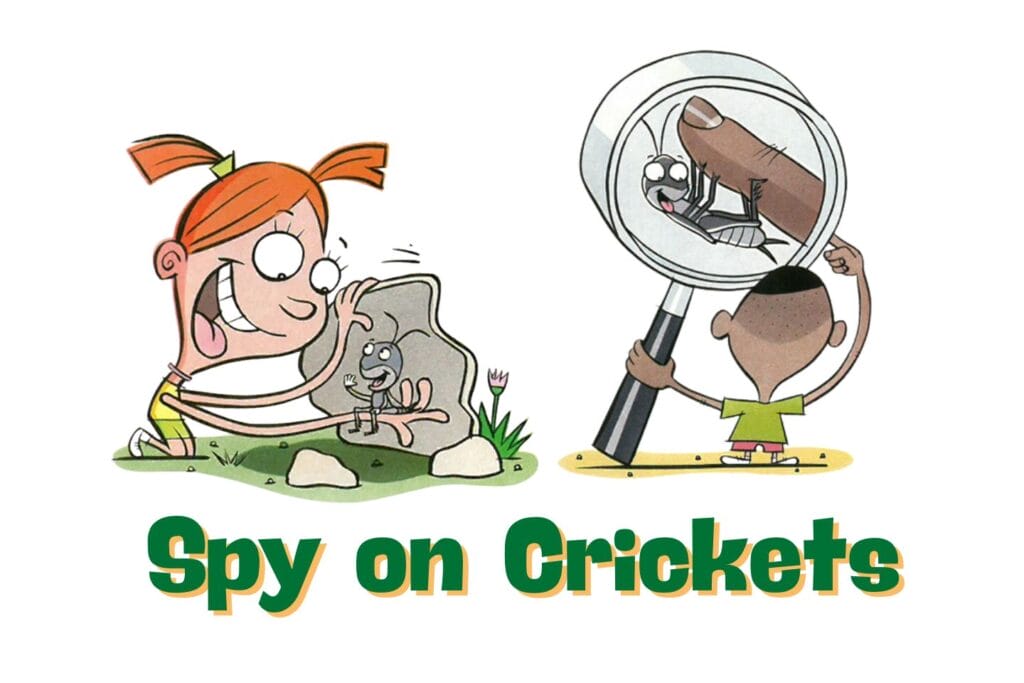
- Catch a cricket. Find a place where there are rocks, logs, or boards lying on the ground. Carefully lift the shelter and get ready to pounce! If you see a cricket, quickly cup one hand over it. Then with the other hand, scoop up your catch. Plop the cricket into a container with a lid. Before you leave, gently replace all rocks, logs, or boards you moved so creatures can have their homes back.
- Build a temporary home. Take your cricket home and find a good place to keep it. Any place that’s room temperature is fine, but never put your cricket in direct sunlight. A large plastic peanut-butter jar or old fishbowl makes a perfect home. Put about an inch of slightly damp soil in the bottom. Add something for your cricket to hide under. Then drop in your cricket.
- Feed it. Cover the jar opening with a piece of screening held in place with a rubber band. Or use a lid with plenty of holes punched in it. Be sure to give your cricket fresh food every day. Add a thin slice of apple or potato. Replace the food every day to prevent mold.
- Study your cricket. A scientist who studies crickets is called a grigologist. Here’s how you can become a grigologist:
– Check out your cricket’s body parts. How many can you name? (Use a magnifying glass to get a close-up look.)
– Watch your cricket closely to determine when it is most active, when it eats, and when it hides.
– Try feeding it different kinds of foods. Which does it like best?
– Dim the lights in the room, then shine a flashlight on your cricket. How does it react? - Record your findings. You might want to keep a cricket journal and record all of your discoveries. Then after a week or so, take your cricket back to where you found it and let it go.
Make a Creature Castle in Your Backyard
Like all creatures, crickets need just the right kind of habitat (place to live). You can help provide good shelter for crickets, as well as for chipmunks, lizards, and many other kinds of creatures. Just find some rocks and pile them up in your backyard. Then keep an eye on your “creature castle” and see how many different animals use it as a shelter.